
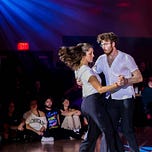

“It’s not on the one. It’s not the mambo. It’s a feeling; a heartbeat.”
As anyone who has ever learned to dance knows, trying not to think of your steps isn’t easy in the beginning. It takes practice, muscle memory, and a certain confidence that eventually gets us out of our own head so we can feel the subtle push and pull of synchronized motion with another human.
The stakes are high in the movie “Dirty Dancing.”
Frances “Baby” Houseman, a pretty, middle-class teen-ager, is coming-of-age in 1963, vacationing with her family at Kellerman’s Resort, their annual summer Catskills tradition.
Dance novice Baby volunteers to learn the mambo so she can perform with the resort’s dance instructor, Johnny Castle, at a previously scheduled paid gig at another resort. She is filling in for Penny, Johnny’s usual partner, who needs an abortion after getting pregnant.
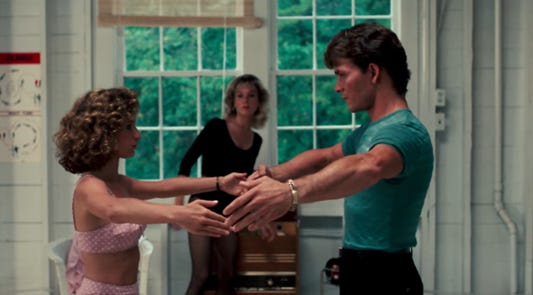
It’s during these intense dance lessons that we watch the partners fall in love.
There are so many parallels between learning how to dance and learning how to make the kind of love that leaves two partners feeling deeply connected — breathless, physically and emotionally. Dancing and sex teach men that if he desires partnered activity, at some point he needs to incorporate the habits learned from his solo experiences, and mindfully build a broader identity open to a partner joining him.
In building this sexual identity, masturbation serves as an opportunity for a man to learn his steps, what mechanically makes him aroused, what propels him closer to orgasm, what he can do to make himself last longer.
But these moves don’t necessarily shield him from the typical experiences men have when they are initiated to partnered sex — confusion, humiliation (premature ejaculation), self-centeredness that leaves his female partner unsatisfied.
In the end, it really does take two to tango. Bringing the most self-aware and mindful one, dramatically increases the chance of one and one equaling two — and increases the chances of a happy partnered sex life.
Framing the issue
Professional dance instructors believe there are three core challenges couples face when learning to dance together.
building a healthy self-frame
mastering balance
learning how to feel the beat
The biggest challenge presented is when one or both partners haven’t developed a healthy “self-frame.” This is the launch point of a co-created space of posture, muscle engagement, and partner points of contact.
Frame is the connection where intentions travel almost imperceptibly between partners. Frame allows a tiny squeeze, a tug, a lingering glance, to be received and answered.
In a sexual relationship, “self-frame” is your broader sexual identity of both body awareness and self-confidence.
We’ve all had those awkward and tense sexual moments, where your frame, and potentially your partner’s, are stiff and out of sync. You fumble and struggle because the sex act is just that — an act.
That’s not the way lovemaking unfolds between two partners who have learned to hold their “frame.”
When Johnny is teaching Baby, he and Penny work a lot on Baby’s dance frame. He reminds her over and over of where her arms and hands go, how to hold them, and how her frame and his should connect.
I follow swing dance improv performers, like Keerigan Rudd, on YouTube. It’s amazing to see two individuals seamlessly originating a completely new set of dance steps right before your eyes, and it feels like they were practicing it for weeks.
But they haven’t.
They move so flawlessly together because they’ve each individually worked hard on their frame, their control over their body and the space they inhabit in partnered dance. They have mastered how to hold a flexible structure that can sensitively receive their partner’s frame.
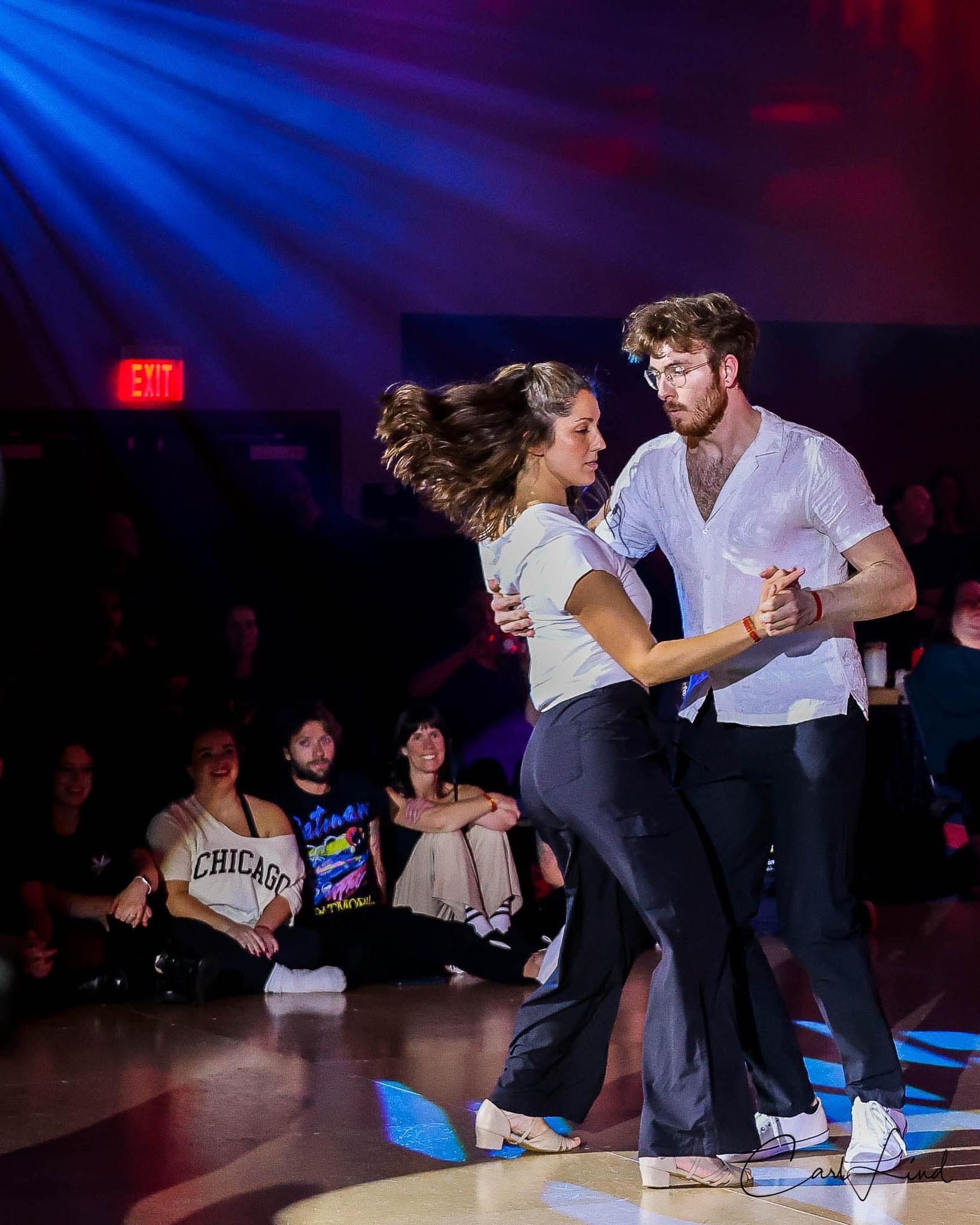
Watching Rudd’s performances is better than porn. It’s magical, two individuals perfectly melded in motion.
Self-frame meets connection
In dance or sex, the shared frame can only be as strong as the weaker self-frame. If either person’s frame collapses, signals get crossed and the duet turns into a tug-of-war.
I have personally found this to be true in sex as well. The moves I learned before partnered sex were way too immature, and so, my first partnered sexual experiences ended up feeling mostly like a performance. They were rushed, self-isolated encounters. And way too often, they were filled with anxiety, leaving little room for me to feel my partner’s signals.
Don’t get me wrong. I achieved my goal. But it was a hollow victory. The whole experience, from arousal, to building momentum, to achieving orgasm — mostly left me disappointed.
My disappointments did however drive me to explore more of my self-knowledge and develop a confident self-frame. Over time, I learned how to be infinitely better attuned to my body, my moves, and hers.
It was kind of like the work and energy that Johnny and Baby put into their dancing — eventually leading to them making love, falling in love, and dancing successfully at the performance Penny couldn’t attend.
Tango in the sheets
Dancing and sensuality have been closely intertwined partners for centuries. From my teenage years, I have pined for a female partner who would take dance lessons with me, so we could be that couple seamlessly flowing out on the dance floor.
Martha Graham, the famous classical dance instructor, believed the power of dancing emanates from the pelvic region. Some of her students even purportedly described the Martha Graham Studio as “The House of the Pelvic Truth.”
“I know my dances and technique are considered deeply sexual,” Graham wrote in her memoir, “but I pride myself in placing onstage what most people hide in their deepest thoughts.”
Isn’t that where our sensuality, our sexual identity, principally resides? In our deepest thoughts?
The movie “Dirty Dancing,” alludes to how bored married female guests flirt and potentially have sex with the summer resort staff. These women are referred to as the bungalow bunnies.
(Their husbands only come up on weekends, according to the resort owner, Max Kellerman.)
At one point in the movie Johnny explains to Baby that rich guests slip him their room keys “two and three times a day.”
After his first sexual encounter with Baby, Johnny refuses dance lesson money from the husband of one bungalow bunny. He respects Baby too much.
He could have kept going, earning bonus money and bonus orgasms. But Johnny had moved on from solo, isolated sexual experiences after making love to a woman he was falling in love with.
He found his frame, and held it, for himself and his partner.
That’s a mindful man.
What does your frame feel like to you?


